

Services ▾
Every service we runDrains and Sewer ▾
Drain CleaningClogged Drain RepairCommercial Drain CleaningHydro JettingSewer Line RepairSewer Line ReplacementTrenchless Sewer RepairVideo Camera Pipe InspectionWater Heaters and Boilers ▾
Water Heater RepairWater Heater InstallationTankless Water Heater InstallationTankless Water Heater RepairBoiler RepairBoiler InstallationLeaks, Pipes and Pressure ▾
Leak DetectionSlab Leak RepairPipe RepairRepiping ServicesFrozen Pipe RepairBurst Pipe RepairMain Water Line RepairMain Water Line InstallationPipe Insulation ServicesWater Pressure RepairLow Water Pressure SolutionsOutdoor Plumbing RepairHose Bib RepairFixtures and Appliances ▾
Toilet RepairToilet InstallationFaucet RepairFaucet InstallationFixture ReplacementGarbage Disposal RepairGarbage Disposal InstallationDishwasher InstallationIce Maker Line InstallationSump Pump RepairSump Pump InstallationGas, Safety and Upkeep ▾
Gas Line InstallationGas Line RepairBackflow Prevention InstallationPlumbing InspectionsPreventative Plumbing MaintenanceWater Quality ▾
Water Filtration System InstallationWater Softener InstallationReverse Osmosis SystemsWhole House Water FiltersCarbon Water FiltrationSediment Water FiltrationUV Water FiltrationIon Exchange Water FiltrationArsenic Water FiltrationNeutralizer Water FiltrationWater TestingService Areas ▾
The full service areaSan Bernardino County ▾
All of San Bernardino CountyHesperiaApple ValleyAdelantoBarstowSan BernardinoFontanaRancho CucamongaOntarioRialtoUplandChinoChino HillsRedlandsHighlandColtonLoma LindaYucaipaTwentynine PalmsBig Bear LakeOak HillsPhelanPinon HillsWrightwoodBaldy MesaHelendaleOro GrandeLucerne ValleyCrestlineLake ArrowheadRunning SpringsBig Bear CityBloomingtonGrand TerraceMontclairYucca ValleyRiverside County ▾
All of Riverside CountyRiversideMoreno ValleyCoronaJurupa ValleyNorcoEastvalePerrisCalimesaBeaumontBanningMenifeeApple Valley repiping, done while you still live there
The older ranchos in town carry sixty years of plumbing history inside their walls, and some of that history is galvanized pipe rusted most of the way shut. We tell you whether the house needs a full repipe or one bad section, then put a firm price on it before a single wall opens.
What sixty years does to a galvanized line
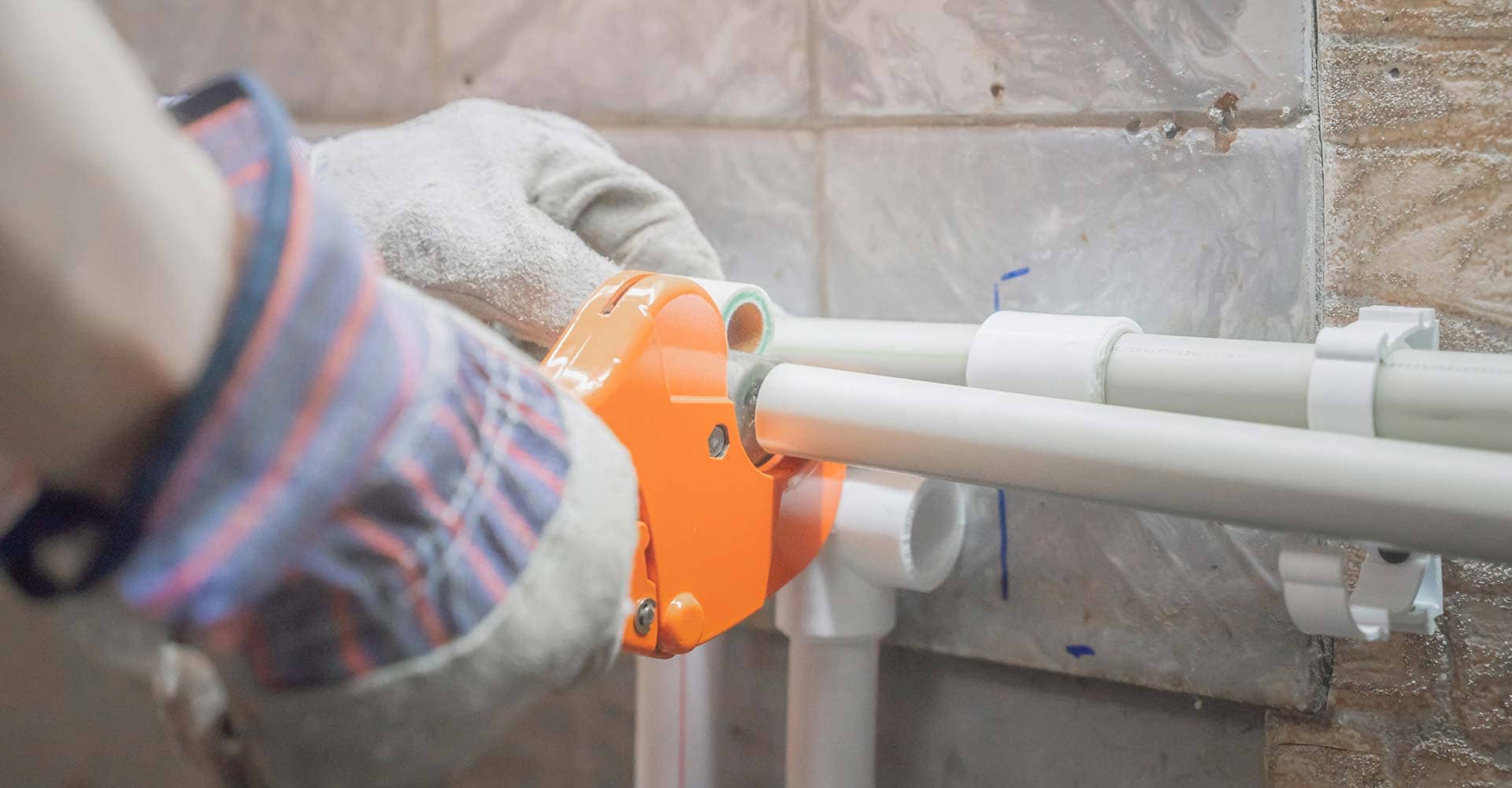
Galvanized steel rusts from the inside out. The bore closes a little every year, so pressure fades slowly and nobody notices until the upstairs shower drops to a trickle the moment the washer starts filling. Brown water after a week away is the same story, told faster.
Hard water in Apple Valley lays scale over that rust. By the time a pinhole opens at one elbow, the pipe on either side of it is usually just as thin, and patching one spot turns into a repair you end up paying for again and again.
How a repipe week runs with the family home
Walk the house together
We trace every supply run with you, mark where walls need openings, and hand over the plan in writing before work begins.
Cover the path
Floors along our route get protected and furniture near each opening gets moved. Openings stay as small as the pipe allows.
Switch over in sections
New lines replace old ones a section at a time. Water comes back on before we leave each evening, so nobody showers at a neighbor’s.
Test, then patch
Every new line holds pressure while you watch. Only then do the openings close, and the rooms get cleaned up before the truck pulls out.
Additions that three owners plumbed three ways
A lot of the older ranchos grew over the decades. A back bedroom one year, a converted garage later, a laundry room moved twice. Each owner hired whoever was around at the time, and the pipe inside those walls shows it.
Where the materials meet
Galvanized from the original house runs into copper from an eighties addition, then into plastic from somebody’s remodel. Joints between different metals corrode faster than either pipe does alone, and that is where the green crust and the slow drip usually turn up.
Runs nobody drew a map of
Additions tend to tie in wherever it was convenient that weekend. A supply line routed through an exterior wall or doubled back across a ceiling is common. Tracing it before we cut keeps the surprises out of your drywall.
Copper or PEX, and how we help you choose
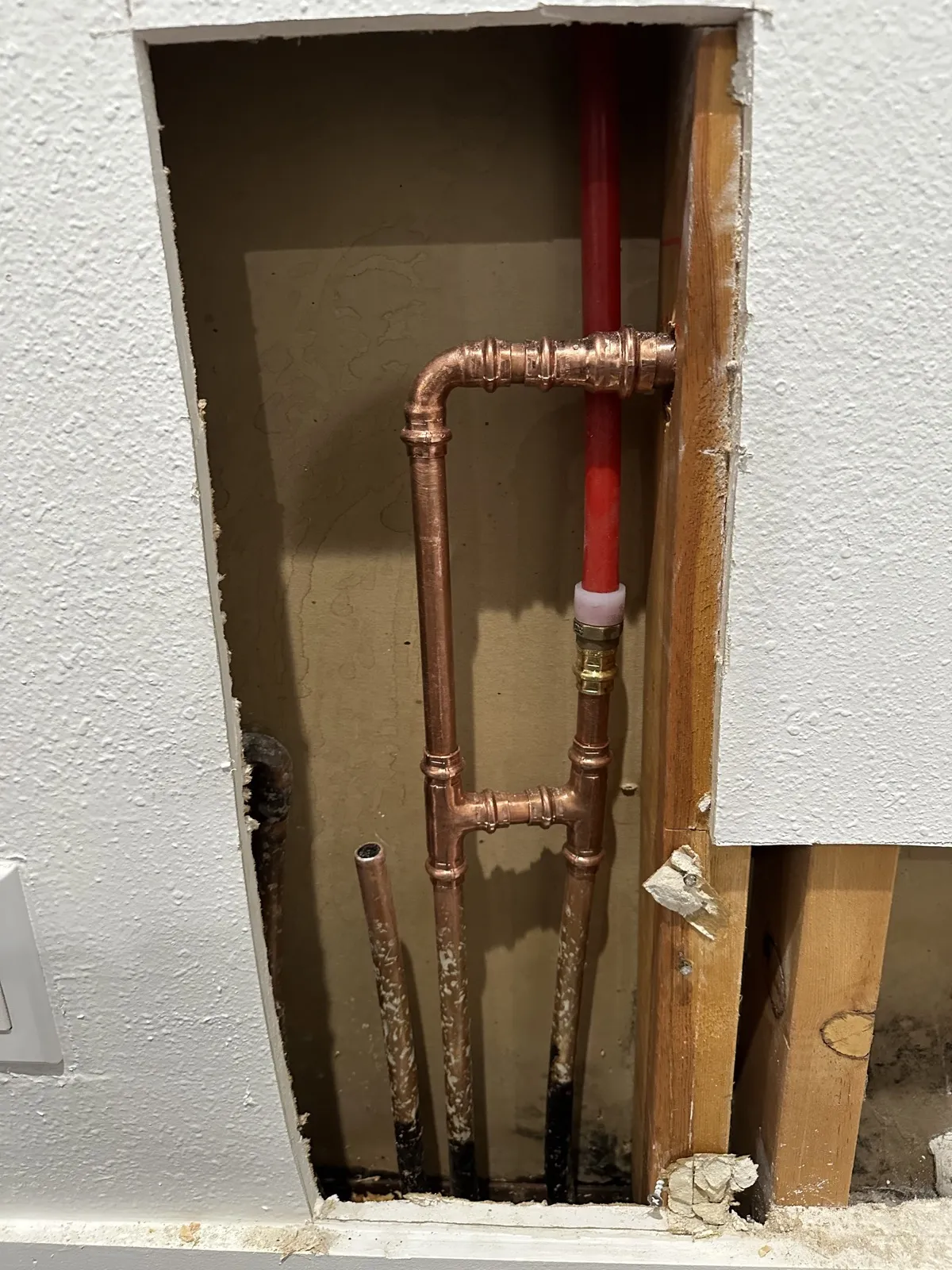
Both make good pipe when they go in right. Copper handles heat and sunlight, has a long track record, and suits exposed runs in a garage. PEX bends around framing, which means fewer fittings hidden behind drywall and fewer holes cut to get it there.
Water chemistry belongs in the decision. Copper in hard desert water can pinhole with age, which is exactly what the slab copper in Jess Ranch and the golf communities is doing right now. We lay out the tradeoffs for your particular house, and then the choice is yours. Photos of past repipes are in our gallery if you want to see both.
Other work behind the same walls
Sometimes one bad run is the whole job
A repipe scope should start with what the house actually needs. If the original lines test sound and the trouble lives in one addition, that run gets replaced and everything else stays in the wall. Carlos built this company around doing it right the first time, and some days that means talking a homeowner out of the bigger job.
When the house does need all of it, we price the full repipe next to the smaller repair so you compare two real numbers. The rest of our Apple Valley work runs on that same honest scoping.
We don’t come back to fix the same thing twice. It’s correct the first time.
“Ruben is very honest and told us we only need to replace the RPV but not the ball valve as other plumber suggested. He did a great job.”Cao M, Google review
Before you commit to new pipe
How do I tell if my house still has galvanized pipe?
Look where the main enters the house or under a bathroom sink. Galvanized is dull gray steel with threaded joints, and a magnet will stick to it. Copper is reddish with soldered joints. If you find both, somebody already replaced part of the house, and we map what is left.
Will we have running water during the repipe?
Yes, every night. The new lines go in section by section while the old ones keep feeding the rooms we have not reached yet. There will be shutoffs during the workday, and we tell you before each one so nobody is caught halfway through a load of laundry.
How much wall has to come open?
Only what the route needs, mostly at fixtures and at the corners where a run changes direction. PEX usually needs fewer openings than copper because it bends through framing. We show you every opening before patching, and each one closes after the new lines pass a pressure test.
What happens to the old pipe?
Pipe that comes out of the walls leaves on our truck. Runs we abandon in place get capped at both ends. Nobody finds a pile of rusted galvanized stacked beside the side yard fence after we go.
What does the firm price cover?
The pipe work, the pressure test and patching the openings we make, all written out before anyone picks up a tool. That number holds once you say go. Anything outside our scope, such as paint or tile, is named on the same paper so there are no surprises later.
Two numbers on the table, then you decide
Ruben or Carlos walks the house, maps every run, and writes a firm price for the full repipe beside one for the smallest repair that would honestly do the job. You pick with both in hand.
Where service and integrity create a legacy
Carlos Hernandez’s shop, locally owned in Victorville and serving the High Desert and Inland Empire since 2019. Correct the first time, open 24 hours Monday through Saturday.
Open 24 hours, Mon to Sat
Victorville, CA 92395