

Ion exchange water filtration, the chemistry behind soft water
Ion exchange is the technology inside every real water softener, and beyond hardness it can pull nitrates, tannins, and specific metals when the resin is chosen right. We spec, install, and rebed ion exchange systems by the numbers.
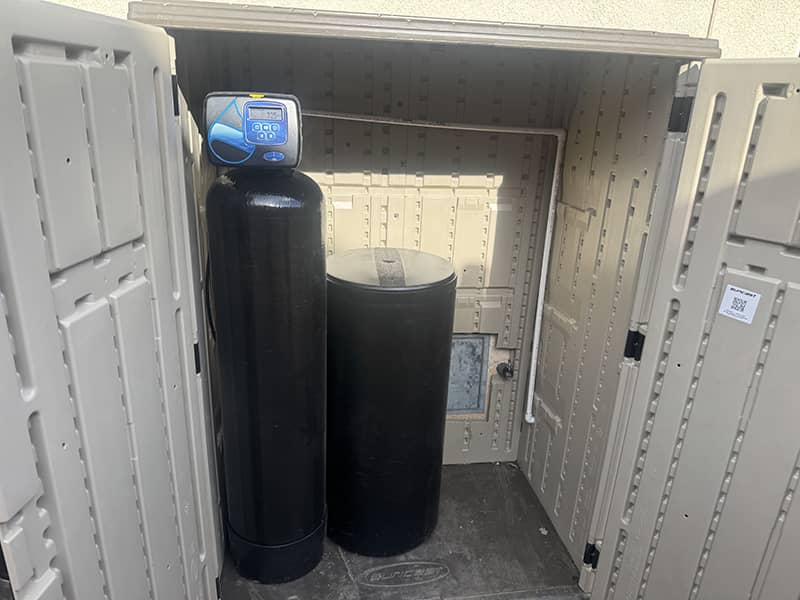
Trading bad ions for harmless ones
Ion exchange resin holds harmless sodium ions and trades them for the ions you do not want: calcium and magnesium in a softener, or nitrate, sulfate, and certain metals in specialty configurations. When the resin fills up, a brine cycle rinses it clean and the trade starts over. It is dependable, measurable chemistry, and everything about it comes down to choosing the right resin and sizing it to your water.
That choice starts with a real test. Softening resin for hardness is the everyday case up here; specialty resins earn their place when testing shows nitrates from agricultural ground or tannin tint on certain wells.
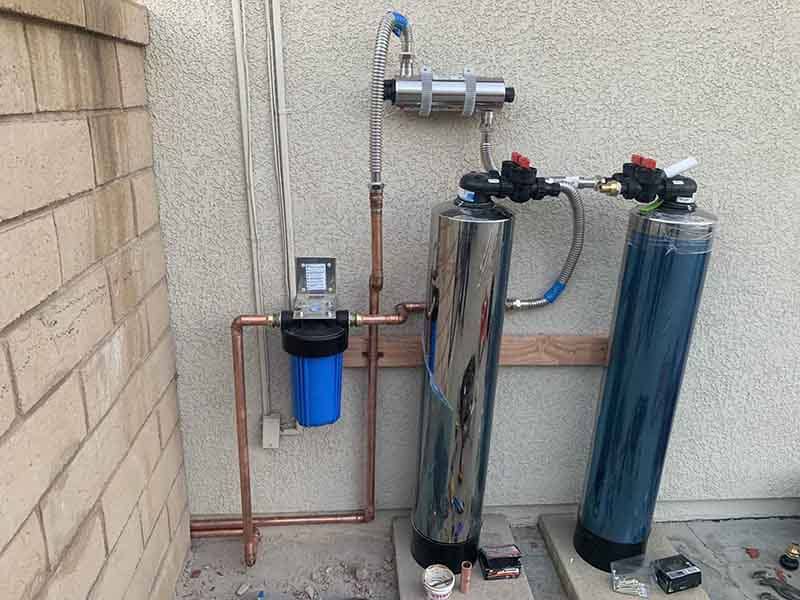
How the job goes
Test the actual water
At your taps, with lab panels where stakes are high. The numbers drive everything that follows, never a brochure.
Design the treatment train
Sediment, carbon, softening, RO, or specialty stages, only what your water argues for, with honest annual costs attached.
Install to be serviced
Bypass loops, isolation valves, and labeled stages, so every future filter change takes minutes instead of a service call.
Retest and prove it
Post-install numbers in your hand, and a maintenance schedule that keeps them true. Treatment without proof is faith.
Sizing, rebeds, and honest maintenance
Resin does not last forever: chlorine chews it, iron fouls it, and ten to fifteen years is an honest life in local conditions. If your softener regenerates constantly but the water stopped feeling soft, the resin may be spent, and a rebed costs a fraction of a new system. We assess before we replace, and we put carbon ahead of resin through our carbon work so the new bed lives longer than the old one did.
Every install is valved for service, programmed by demand rather than timer, and documented so the next question has an answer on paper.
Out here, the desert writes the rules
Nitrate readings on wells near the old agricultural stretches of the valley floor are worth checking annually, and ion exchange is one of the proven answers when they climb. For everyone else, this is the chemistry quietly running your softener right now.
Work that pairs with this
Certified, on paper and in practice
Handle certified. A.O. Smith certified on water heaters. An Impact Water Solutions partner on filtration. The certifications are not wall decoration, they are why the work passes inspection the first time and why the warranty behind it actually holds. Sixty plus years of combined experience rides on every truck.
We don’t come back to fix the same thing twice. It’s correct the first time.
“I called them in the morning and they came and replaced my water heater that very day. Ruben and Carlos Hernandez are the ones that came. They are very honest and they did a fantastic job. I definitely recommend this company to anyone else, especially landlords.”Halna, Google review
Asked at the front door
Is ion exchange the same thing as a water softener?
A softener is ion exchange tuned for hardness, the everyday case. The same technology with different resins addresses nitrates, tannins, and specific metals. Which configuration you need, if any, is what the water test decides.
My softener runs but the water is not soft anymore. Why?
Spent or fouled resin, most likely, chlorine and iron both shorten resin life here. A rebed replaces the media inside your existing tank for far less than a new system, and we test first so nobody rebeds a system with a different problem.
Can ion exchange remove nitrates from well water?
Yes, with nitrate-selective resin, properly sized and maintained, it is one of the standard treatments. On drinking-water taps, reverse osmosis is the common alternative, and testing plus honest math picks between them.
How long does resin last?
Ten to fifteen years in typical local service, less on chlorinated water without carbon protection, less again with iron fouling. Carbon ahead of the resin is the cheap way to buy the long end of that range.
What maintenance does an ion exchange system need?
Salt in the brine tank, a demand-programmed regeneration schedule, and a periodic checkup that the settings still match your usage. We handle the checkups on a schedule if you would rather never think about it.
Open 24 hours, Monday through Saturday
Emergencies get answered by a plumber, not a queue. Scheduled work gets a window we actually hit. Either way, the fix holds.
Where service and integrity create a legacy
Carlos Hernandez’s shop, locally owned in Victorville and serving the High Desert and Inland Empire since 2019. Correct the first time, open 24 hours Monday through Saturday.
Open 24 hours, Mon to Sat
Victorville, CA 92395